
Does your workplace have learning environments and online courses, yet their use remains disconnected from everyday work? Do employees attend training, but rarely apply the content in their work, so that it fails to develop your operations more broadly?
Learning should not be an isolated intervention, but part of a continuum and of the way work is done. Even the best courses and training do not automatically turn lessons into skills until participants have the chance to practise and apply their insights.
However, this requires those who design and implement learning to spend a little more time considering how to plan internal training and coaching so that learning translates into skills and has practical value in everyday work.
In this blog, we explain how to support learning by investing in learning design as part of planning and delivering internal training.
Challenges in planning internal training
There are many ways and approaches to developing skills. Once you have decided on the priorities for skills development and the relevant ways to develop the selected skills, one next step is to plan training. This is where designing different learning paths and training programmes comes in.
In many organisations, employee skills development has traditionally been planned using what we might call a central-kitchen model. In this model, a central unit plans and prepares activities such as training and courses, then serves them to employees.
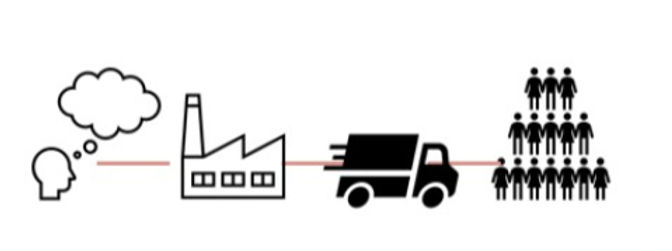
This approach worked in an era when job roles were more stable and change was slower and more controlled. With working life changing faster than ever, agile approaches are needed to maintain skills and learn new things.
When learning design is chosen to help plan these skills development activities, the question is: what needs to change in the way we work, and what kind of learning does that require? When the focus shifts from content to impact, the principles guiding the design also change.
To support the planning of internal training, we have developed a learning design process model and tools that enable everyone designing learning in an organisation, from supervisors to HR professionals, to follow the same process and evaluation framework. The result is consistently high quality and learning that has practical value in everyday work.
The need arose directly from practice, as our client organisations highlighted four recurring challenges:
-
How do we know when training is the right solution and when something else is needed? Not every development need can be addressed through training. We need to assess whether the issue concerns a skills gap, operating practices, leadership or structures, and set learning goals and pathways accordingly.
-
How can we design a pedagogically sound, effective training programme without being training or education professionals? Internal experts know the content, but how do we ensure that learning is goal-oriented, participatory and transferred into everyday work?
-
How can we ensure consistent quality and alignment across training in different units and delivered by different people? When several people deliver and facilitate training, how do we maintain a shared structure, common goals and quality of learning?
-
How can we build a coherent, consistent learning experience from content on different platforms and in different formats? How do we combine online courses, workshops, materials and independent study into a clear whole rather than a fragmented collection?
Sound familiar? Are you wondering whether your current approaches help people apply what they learn in everyday work? Next, we will explore the three principles we also apply in our process model, and how you can use them to support learning design in your own organisation.
A three-principle model for learning design
At Kuulas & Co, our approach to designing learning comes down to three principles:

- Learning starts with a need
Effective learning begins with understanding everyday work and learners’ needs. Before planning training, you need to clarify which strategic goal it supports, what participants need to do differently in their daily work, and what skills will also be needed in the future.
In practice, the best way to deepen that understanding is to begin the design process with discussions or interviews. Ask the target group and their supervisors where everyday work really gets stuck: what kinds of challenges need to be solved? Is the right solution training, another learning product or an organisational process? Set learning goals only once you have confirmed that you are addressing the right, verified challenges.
When you understand the realities of work, you can design learning that feels meaningful and that participants want to invest in.
- Learning is participatory and collaborative
Another interesting question about learning is what makes people keep putting effort into it alongside their busy working lives.
When we design learning and learning processes, and steer people in a shared direction in line with the organisation’s strategic goals, we must keep the learner clearly in mind: how they see and experience things, what motivates them, why and how.
Adult learners are motivated (Lemmetty, Hämäläinen and Collin, 2022) when learning is useful, allows self-direction, is social and can be applied in an authentic context.
-
The benefit may be, for example, that learning helps learners solve problems at work or elsewhere in life, develop in their role or advance in their career.
-
Adults want to take responsibility for their own learning. For adult learners in particular, motivation to learn must come from within, not from outside.
-
Adults inevitably have individual experiences from life and work that form the basis for organising new knowledge and learning. It is easier for adults to engage with content that helps them understand experiences they want to handle better and more effectively in the future.
-
The workplace is an excellent setting for sharing skills and experiences. Adults do indeed learn a great deal at work: by asking colleagues and working things out from instructions. A sense of belonging and community supports adults’ motivation to learn.

In other words, people will not commit to training if:
-
they do not understand its purpose
-
they do not see a connection to their own work
-
they do not feel like active participants
Learning design helps shift the focus from lecturing to discussion, from sharing information to building insights, and from individual performance to collaborative development.
Approaches that have proved useful in practice include connecting content to case examples raised by participants, and using focused, well-designed preparatory and between-session assignments that support the training objectives. Participatory facilitation methods are also important and can be used in both remote and in-person learning.
- Learning is put into practice
One of the most common mistakes is to assume that all learning takes place during the training session itself. In reality, learning only happens when people try something new, learn from those experiments and reflect on what they do.
Practical ways to account for this in training design include dividing training into several sessions over time and guiding learning through between-session assignments directly related to work.
When learning is spread over a longer period, skills take root. You can support the effectiveness of the whole programme, for example, by scheduling follow-up discussions 1–2 months after the training ends.
Case example: learning design in Lapin hyvinvointialue
When Lapin hyvinvointialue, the Wellbeing Services County of Lapland, began operating in 2023, more than 8000 employees and 27 different organisational cultures came together under the same management. Supervisors led distributed teams whose members could be hundreds of kilometres apart.
The Jotos leadership programme was created to support the change. Kuulas & Co was selected as a partner to support employee skills development through learning design, using a co-created model intended to standardise the training design process and quality criteria.
Jotos’s main objective for the collaboration was to develop an internal model for designing training and courses that would connect training content with other ways of learning at work and ensure that learning was transferred into work.
We used learning design principles in the planning process. First, we identified the intended change and strategic priorities: what do supervisors need to do differently in their daily work within the new organisational structure?
The design model was built as a phased learning process rather than as individual training days. A step-by-step model and templates were created to support it, enabling learning to be designed and delivered more consistently and with more uniform quality, and to be put into practice effectively throughout the organisation.
How to use learning design in your own organisation
Alongside the design principles already introduced, you can apply a learning design approach to planning internal training using the following simple model, which will get you off to a good start as a learning designer:
- Define the intended impact before the content.
Write one sentence: “After this training, participants will do ______ differently.” If the sentence is difficult to complete, the goal is not yet clear enough to move on to designing the content itself.
- Design a learning path, not an isolated component
Ask: what happens before the training? What happens during it? What happens afterwards? Divide the training into corresponding sections and follow this structure when designing the content. Remember to set supporting goals to guide how you populate the structure with content, and ensure that the overall experience flows well.
- Make application compulsory
If applying what has been learned is left to participants’ own initiative, it often does not happen. Build in concrete opportunities and methods for experimentation and piloting, support shared debriefs, and celebrate successes with achievable, visible goals. Learning becomes stronger and its benefits clearer when it is linked to results.
- Coach internal experts to succeed
Internal experts are often the best trainers when they receive support with facilitation, participation and learning design. By investing in their skills, you strengthen the organisation’s own capabilities, build a long-term learning culture and reduce the need for disconnected training activities.
In conclusion: learning is a strategic choice
When learning is seen as part of the way work is done, the organisation moves away from reactive training towards planned renewal.
Learning design is not about complicated models, but about better questions:
-
What are we really trying to change?
-
How do we ensure that the change shows up in everyday work?
-
How do we help people succeed?
When learning is connected to strategy, daily work and the social context in which it is applied, we strengthen the foundations of a learning organisation—and that is one of the strongest competitive advantages in a rapidly changing world.
Kuulas & Co. We help organisations’ experts, coaches and training designers make their training and other learning products high-quality, relevant and effective: directly connected to the company’s strategic priorities and supportive of renewal in everyday work. Get in touch and let’s talk more.

Elina Pihlantie
Organisational developer
Learning organisations
Strategic learning
Employees’ career and learning aspirations

Inkeri Lönnrot
Learning designer
Knowledge management
Agile team learning
Online and blended learning