
In most organizations, people are learning all the time. They are curious, do their work well, and develop themselves out of a desire to succeed and grow professionally. The problem is rarely that people do not learn or want to develop and succeed at work.
Instead, when skills development lacks goals, there is a risk of losing focus. If an organization wants to harness skills development activities and learning to support the strategic priorities guiding its operations, it must establish working practices and a management model that support this aim.
A skills development strategy is often implemented through a capability model: identifying the capabilities essential to organizational success, assessing current skills, and deciding how to develop those skills systematically.
This takes us to the heart of leading strategic learning. In strategic skills or learning management, the question is: what skills do we need to reach our strategic destination?
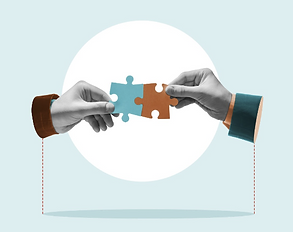
Without a shared purpose and common learning goals, skills risk becoming fragmented and focus may be lost. Strategic skills management is an essential part of implementing strategy and building the ability to execute it.
In this article, we explore what leading strategic learning involves and what actions can advance it.
A skills development strategy helps you plan, lead, and make better choices.
A skills development strategy is a systematic approach that connects employees' skills with business goals and future needs. Its purpose is to ensure that the organization has the right skills, now and in the future.
All this requires directing learning towards strategically significant priorities — in other words, strategic learning — as well as leading that learning. At its best, strategic learning supports the achievement of strategic goals and performance.
Learning management should not be seen as a separate process, but as part of management overall. However, embedding selected priorities in everyday work and the processes that guide it often requires designing a management model, assessing existing practices and processes, and designing entirely new ones.
A skills development strategy is implemented through a capability model, which can also be seen as a management model for leading strategic learning. Capability management means identifying the capabilities needed in the future, assessing current skills, and deciding how to develop skills systematically within the selected capabilities.
Key elements of capability work include at least:
-
anticipating future skills needs
-
identifying existing skills and skills gaps
-
enabling continuous learning in everyday work
-
using diverse development methods
-
clear implementation, responsibilities, and monitoring
In practice, a skills development strategy is built in stages: from understanding the current situation to defining goals in relation to the business, and on to planning and implementing concrete development activities.
The aim is to move from individual training events towards continuous, forward-looking skills management that supports organizational renewal and competitiveness.
Written down like this, it may sound simpler than it is. In reality, this is a highly complex undertaking whose impact emerges only through how capabilities are managed, developed, and integrated into everyday operations.

Managing capabilities requires systematic development, management commitment, and structures for learning. A sustained operating model is needed in which strategic capabilities guide skills development, the renewal of working practices, management, and the organization's capacity for renewal.
Furthermore, putting learning and change into practice requires a deep understanding of human learning, motivation, and behavior. Entire scientific disciplines underpin these phenomena, and drawing on them is essential to building an organization's capacity for renewal so that planned activities become embedded in everyday work.
Strategic capabilities and the capability model
Capabilities and strategic capabilities are often confused with each other, as well as with related concepts such as skills and competencies. I would define them something like this:
A capability model is the connecting thread in strategy-driven skills management. Strategy provides direction, and strategic capabilities point the way to what we must know and be able to do to get there.
The purpose of a capability model is to ensure that all activities work towards a jointly defined goal, at management team level, in managers' work, and in teams' everyday activities.
An organization's capabilities combine different skills and resources that sustain its ability to function and succeed. They encompass skills, processes, technology, and data.
A capability is therefore not just the skills of individuals. It arises from a combination of factors, such as people's expertise, operating models and processes, management, technology and tools, culture, information and data, and collaborative networks.
Capability is the ability to act, demonstrated in what an organization can achieve by using these factors in practice. For example: AI expertise is a skill, while using AI to develop the business is a capability.
Nor are all capabilities strategic. A strategic capability is one that is essential to implementing strategy and achieving competitive advantage.
A strategic capability answers the question:
"What must we be exceptionally good at for our strategy to succeed?
Building a capability model therefore begins by defining these strategic capabilities. Strategic capabilities are not a list of skills, but an evolving view of everything the organization needs to succeed in the future. We might describe this as the organization's ability to use skills, practices, processes, technology, and resources to achieve the desired outcome.

A capability model and the definition of strategic capabilities create a connecting thread that brings development activities into a coherent whole and a development plan. When strategic capabilities are defined throughout the organization and capability management is integrated into these activities, the model becomes a concrete and influential guiding star for operations.
At Kuulas & Co, our strategic learning process model is based on identifying future skills by linking the organization's strategy to the capabilities required to implement it. We then use our process model to bring these capabilities to managers within the same function and onward to their teams, helping identify and prioritize development focus areas and guide the next stages of work.
Unlike IT projects, in which we have also been involved, our starting point emphasizes a framework or structure for future skills needs and the identification and definition of development priorities going forward. One or two of these might concern automation, digital tools & adapting to new ways of working, while others might concern another set of capabilities that sustains operational effectiveness, such as information management & quality or change capability & continuous improvement, with their associated subgoals and definitions.
In conclusion
Defining strategic capabilities is an important step, but real impact comes only from how those capabilities are managed, developed, and integrated into everyday operations.
After defining and implementing strategic capabilities, the organization has a shared structure and language for the skills it will need in the future. This provides a strong foundation for anticipating change and preparing more systematically for future skills needs.

When the direction is clear:
-
development becomes focused
-
navigating change becomes easier
-
pursuing and prioritizing one's own development becomes easier
-
people understand what is expected of them
-
learning connects with work
-
strategy starts to show up in everyday work
At that point, skills management finally stops being a support function and becomes one of the most important ways of building the future.
If strategic learning and strategic capabilities interest you, join our August webinar on 26.08.2026 at 09.00–10.00. Read more and register: https://www.kuulas.co/webinaarimme
At Kuulas & Co, we believe a better working life is built one thought, one insight, and one learning experience at a time. And that the best expertise does not live in management team memoranda, but in how people bring it to life.
We are also happy to explore these questions further with you and help if you would like to work together to model the whole approach for your organization.

Elina Pihlantie
CEO of Kuulas & Co Oy and founder of the SKILLE network